In modern urban construction and lighting engineering, high mast lights serve as essential infrastructure, playing a pivotal role in large-area illumination. With their innovative structure and versatile functionality, high mast lights bring brilliance and vitality to cityscapes, enhancing nighttime visibility and safety.

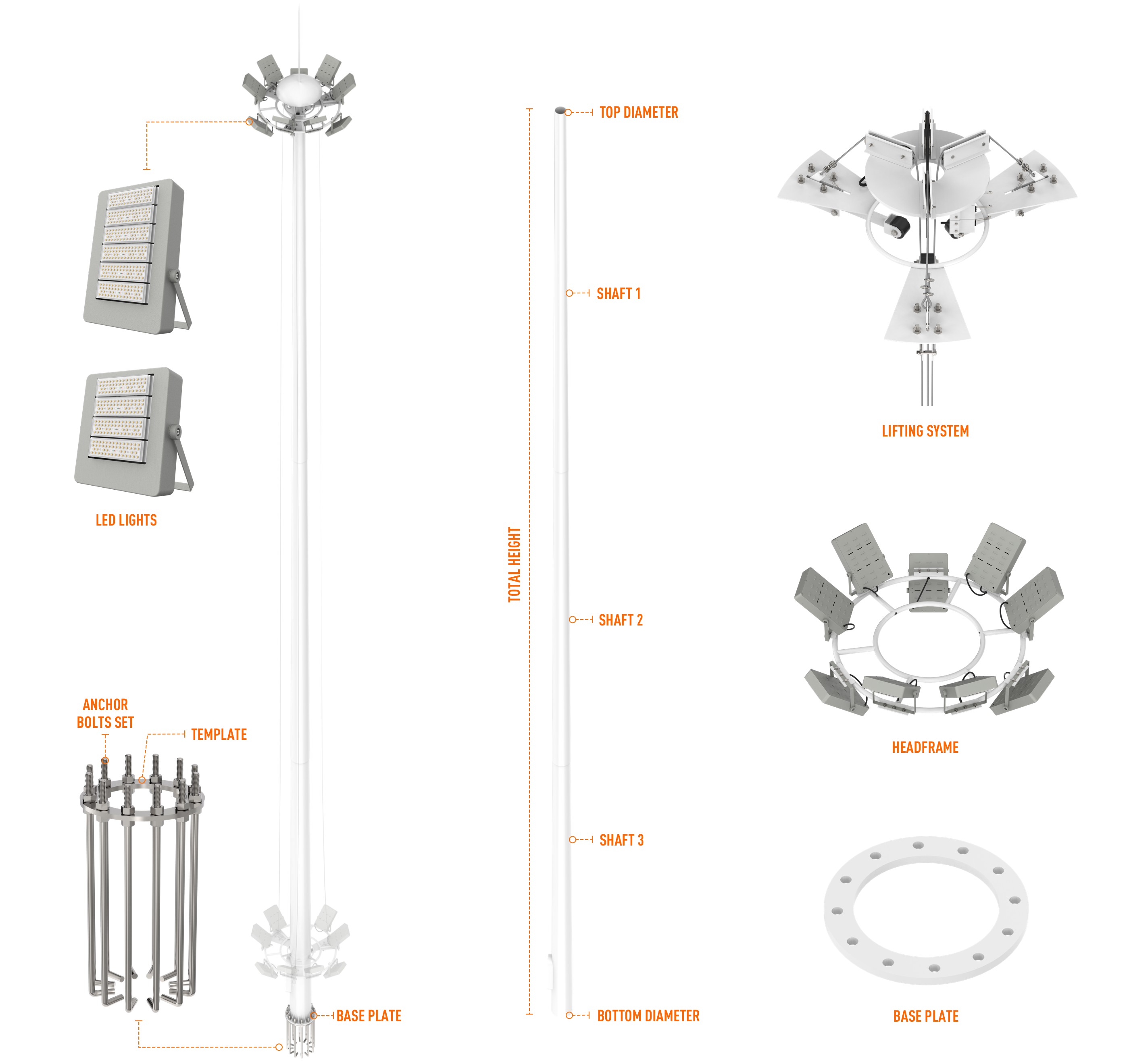
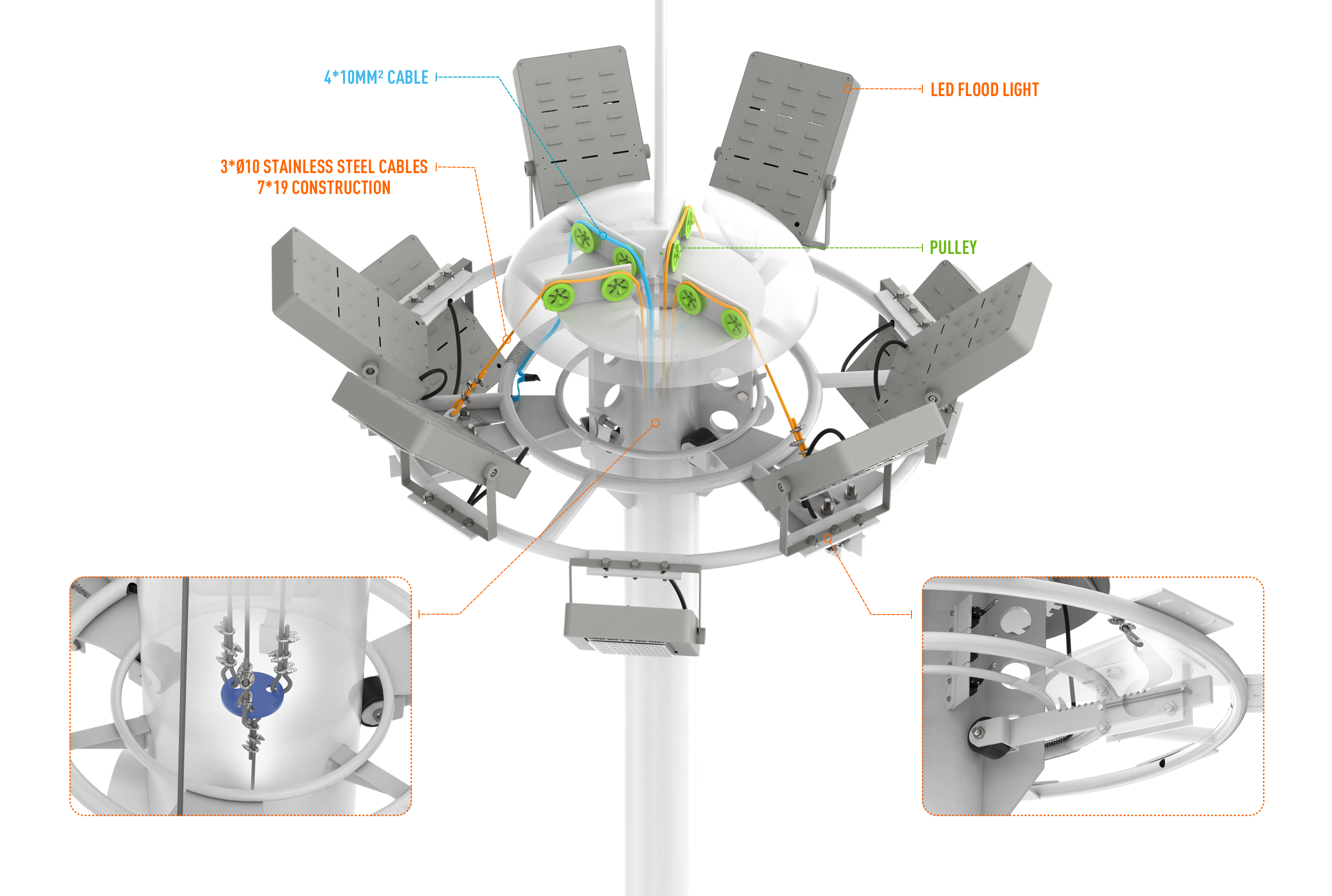
High mast lights can be categorized into lifting and non-lifting types. The height of lifting poles is typically over 18 meters, and they feature a convenient electric lifting mechanism. Once the lamp panel reaches its working position, it automatically locks into place, disengages from the lifting cable, and secures safely.
Lifting high mast lights are equipped with both manual and electric control options. These systems enable the lamp panel to be reliably lowered to a height of 2.5 meters above the ground, facilitating maintenance and repairs.
All fixtures in lifting high mast lights adhere to the IP65 international standard, effectively preventing dust and rainwater intrusion and ensuring the longevity of the light bulbs. The fixtures are typically constructed from corrosion-resistant aluminum alloy or stainless steel for enhanced durability.
High mast light poles generally range from 15 to 40 meters in height, with common specifications including 15m, 18m, 20m, 25m, and 30m. Custom heights can also be tailored based on specific project requirements, offering flexibility for various applications.
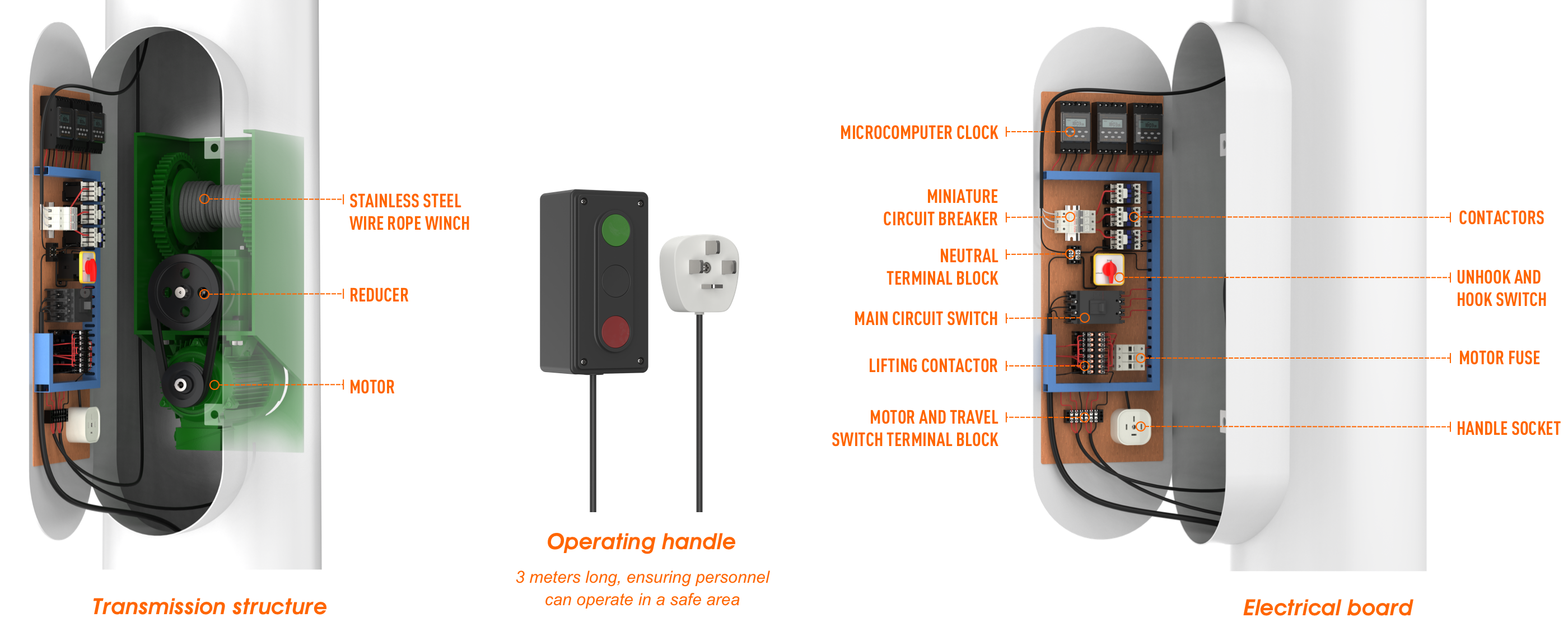
The rectangular cavity at the base of the lifting pole lamp houses the electrical control system, electric motor, and other lifting components. By situating the control system inside the lamp post, potential malfunctions caused by harsh outdoor conditions during lifting and lowering operations are effectively minimized. The system is equipped with multiple circuit overload protection devices, ensuring reliable operation.
Copper-based silver plating is widely utilized as the conductive material in the system’s circuits to guarantee excellent electrical contact, enhancing overall performance.
The lifting mechanism includes an electric motor, an electromagnetic brake-type worm gear reducer, a safety coupling, main and auxiliary wire ropes, a rope splitter, and a movable pulley group. This combination drives the lifting and lowering of the lamp disc. The worm gear reducer offers high self-locking capacity, compact transmission, and a large transmission ratio. To further reduce torque and enhance efficiency, a movable pulley system is integrated, achieving a lifting speed of under 0.2 meters per second.
The lifting and lowering of the lamp panel are controlled by reversing the motor’s rotation. For enhanced security and theft prevention, the rectangular cavity is fitted with a sealed door equipped with a custom-designed lock.
The significant height of high pole lights allows them to illuminate larger areas, enhance road lighting quality, and improve nighttime driving safety.
High pole lights typically utilize high-efficiency, energy-saving LED light sources, which provide soft, uniform, and glare-free illumination for an optimal lighting experience.
Designed with careful consideration of wind and earthquake resistance, high pole lights feature a stable and reliable structure, ensuring dependable operation even in harsh environments.
The elegant and refined design of high pole lights seamlessly integrates with surrounding environments, enhancing the visual appeal and overall image of the city.
High pole lights are widely used in urban roads, squares, parks, scenic areas, ports, docks, and other locations, delivering essential nighttime illumination for cities. As a key element of modern urban lighting, high pole lights bring vibrancy and brightness to cityscapes after dark. With ongoing technological advancements and growing environmental awareness, high pole lights are evolving towards greater intelligence, eco-friendliness, and personalized designs, contributing to the sustainable development of urban environments.